








CONSTRUCTION
Steel and cement: what the grades and labels actually mean
Learn to read TMT bar grades and cement types so you can check what arrives on site against what your engineer specified.
Steel grades such as Fe 500 or Fe 500D show the minimum strength and ductility of a bar, and cement types such as OPC and PPC describe how it is made and how it behaves. Your structural engineer picks them for a reason. Knowing the labels lets you confirm that what is delivered is what was specified.
Reading steel grades
TMT bars in Indian homes are usually Fe 500 or a higher grade, made to IS 1786. The number is the minimum yield strength in N/mm2, so Fe 500 means at least 500.
- Fe 500: a common grade for residential work.
- Fe 500D: the D stands for ductile. These bars bend further before breaking, which helps in earthquake-prone zones.
- Fe 550 and Fe 550D: higher strength, used where the design calls for it.
Jaipur falls in a seismic zone, so ask your engineer whether ductile bars are specified for your design.
Checking steel when it arrives
- Look for the manufacturer's mark rolled into the bar, along with the grade and size
- Ask for the mill test certificate for the lot
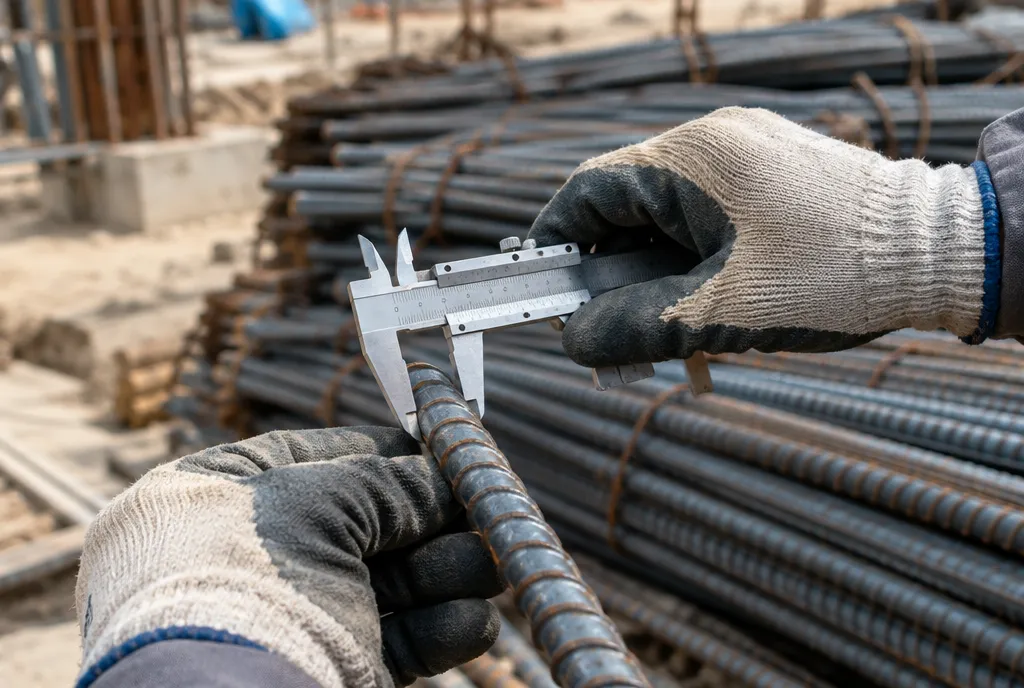
- Confirm the diameter of a few bars with a calliper
- Weigh a measured length. A 12 mm bar weighs roughly 0.89 kg per metre, with a small tolerance allowed by IS codes
- Reject bars with heavy flaking rust, bends or cracks
Understanding cement types
Ordinary Portland Cement (OPC) comes in grades 43 and 53. Portland Pozzolana Cement (PPC) blends in fly ash, and is widely used for general house construction. The grade number is the minimum 28-day compressive strength in N/mm2 when tested as per the IS code.
- OPC: gains strength faster, so it is common where early strength matters.
- PPC: gains strength a little slower, but gives a denser, more durable finish when cured well. Plan longer curing.
- Which one suits which element is a decision for your engineer, not the cement dealer.
Reading the cement bag
A genuine bag carries the type, grade, weight, manufacturing or packing date, and the BIS standard mark. Fresh stock is better, since cement slowly loses strength when it absorbs moisture. Lumps that do not break easily between your fingers are a sign it has gone damp.
Storing both materials properly
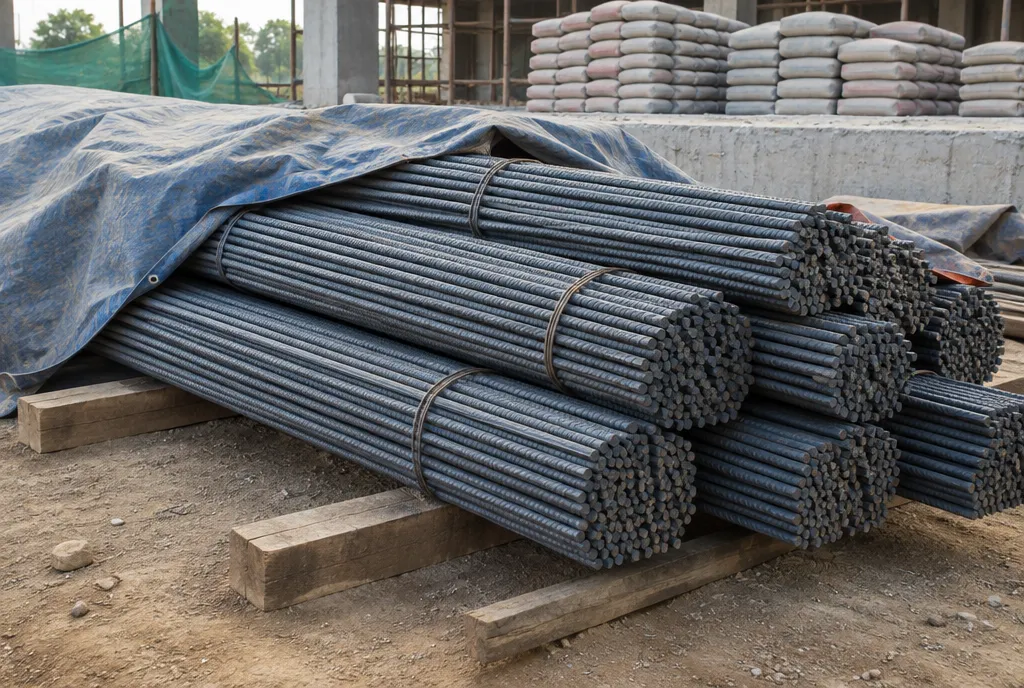
- Keep steel off the ground on sleepers and covered during rain
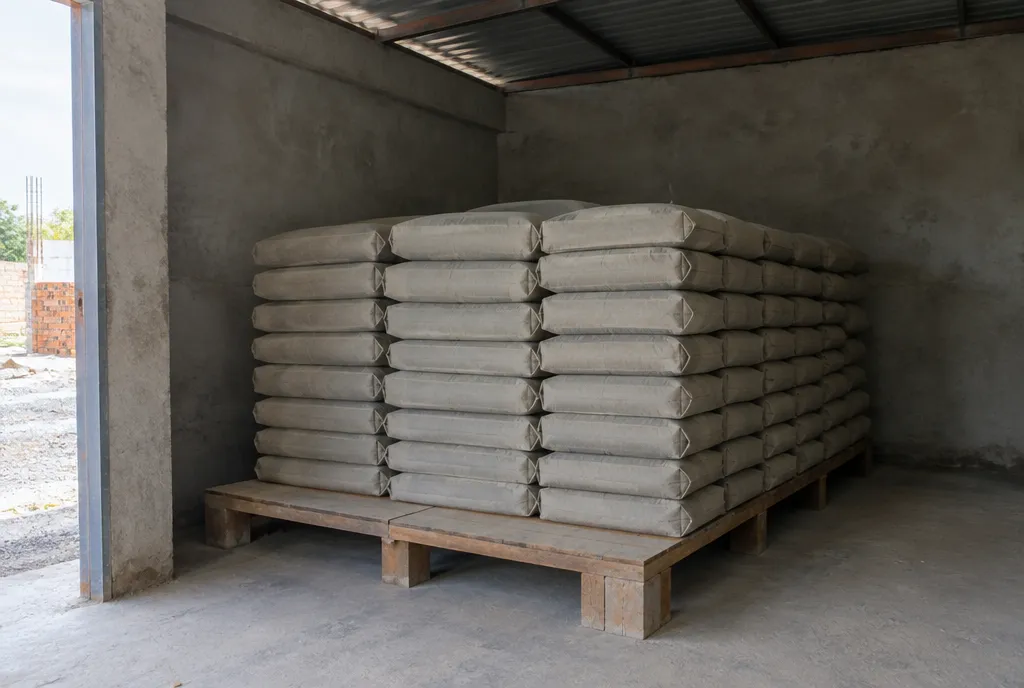
- Stack cement on a raised, dry platform away from walls, and use older stock first
- Keep sand and aggregate separate and clean
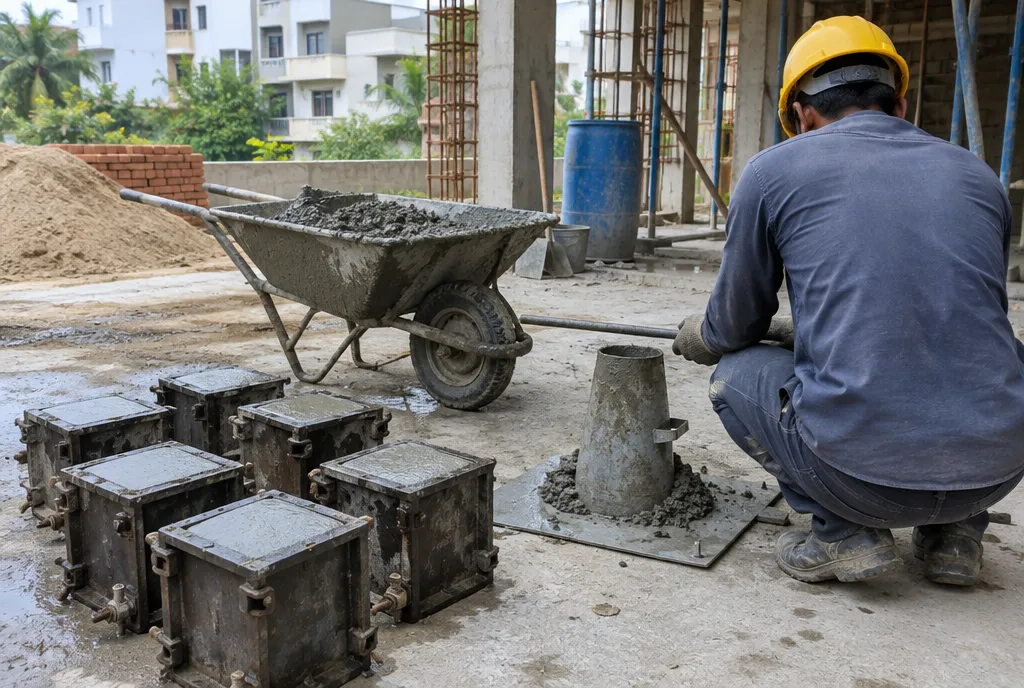
Test cubes taken from the concrete are the final check on what went into the building. Questions on materials are welcome in our FAQs.
How Reidius Infra can help
Reidius Infra builds to the specification your engineer sets, and we can explain every material choice in plain words. Book a free consultation to review your plans and materials, wherever you are based.